By Jerald Jimenez
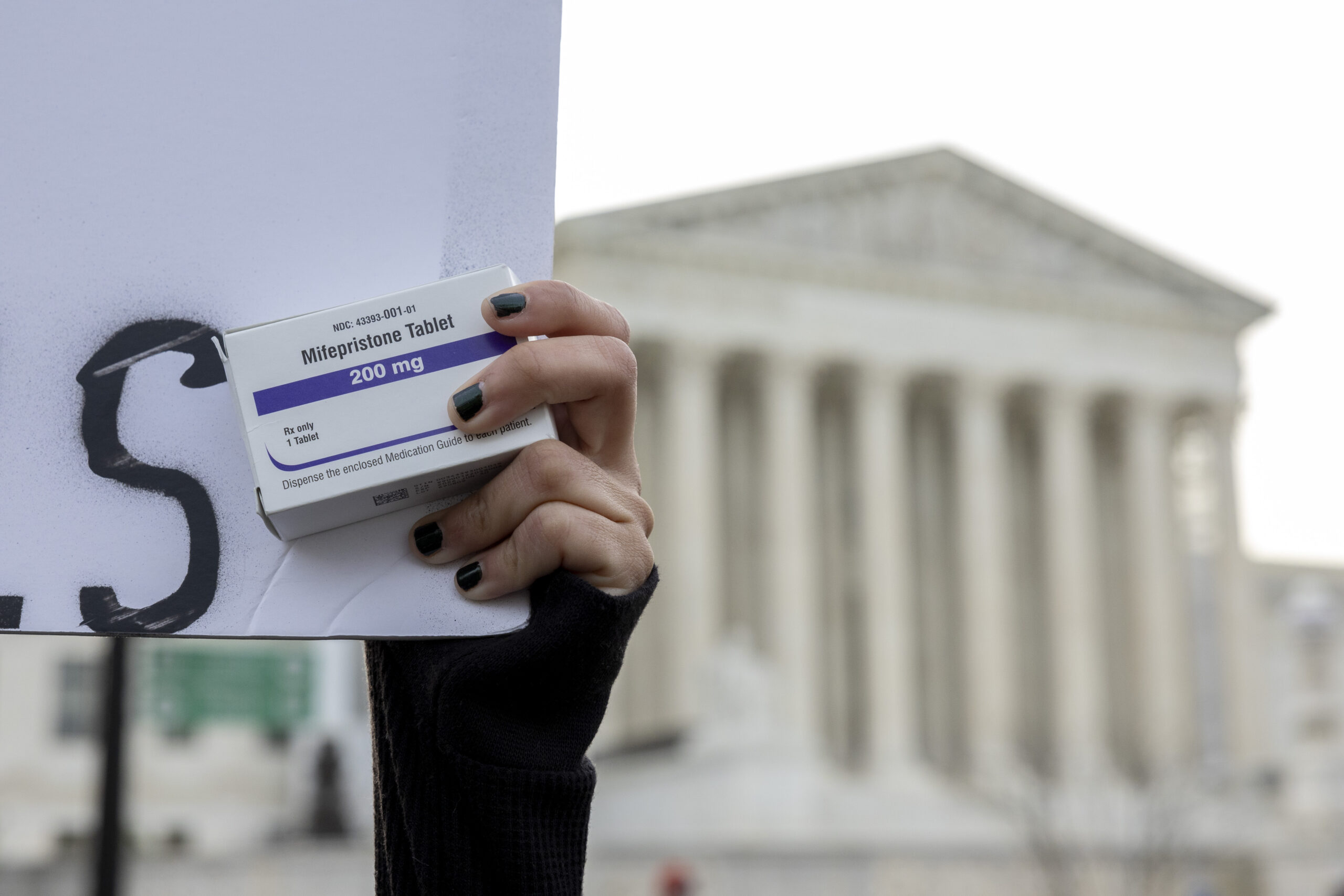
The Supreme Court this Monday restored access to the abortion pill mifepristone by mail, and temporarily suspended the order of an injurious court that had restricted its access through this route throughout the country.
The order, which was signed by Justice Samuel Alito, temporarily allows women seeking abortions to obtain the pill at pharmacies or by mail, without needing to see a doctor in person, ABC News reported.
Attorneys general joined together to reject Fifth Circuit ruling
Hours before the recent ruling, New York Attorney General Letitia James led a coalition of 21 attorneys general and the District of Columbia in order to demand that the Supreme Court suspend this ruling, which the Food and Drug Administration (FDA) previously listed as safe.
The court ruling sought to force patients to rule out receiving it through telehealth or mail-order pharmacies.
“Forcing patients to get mifepristone in person won’t make anyone safer and won’t stop people from needing abortions,” stated James, who highlighted that each restriction of this style has a human cost, because in his opinion, it is paid by the patient who will now have to drive hundreds of miles or in the case of mothers who cannot find child care.
“The worker who cannot miss a day’s pay and every person whose health is put at risk by delayed care. The Supreme Court must follow the science and stop this dangerous rollback of reproductive freedom,” he added.
Mifepristone, approved in 2000, It has been used by approximately 7.5 million people in the US.
Demand increases for telehealth services
The use of telemedicine for abortion care grew from 5% in 2022 to 27% in 2025, and in this sense, prosecutors argue that reinstating the physical presence requirement would disproportionately affect rural and low-income communities. They also warned that overwhelming clinics with in-person consultations can delay other essential services such as cancer screenings and prenatal care.
According to the coalition, the Fifth Circuit’s ruling interferes with the sovereign authority of states to protect the health of their citizens. In the joint statement, prosecutors say the court “has put a federal thumb on the scale to settle states that have made contrary policy decisions, but that is exactly the opposite of what [la Corte Suprema] ordered in Dobbs.”