Small and medium-sized food merchants in the Big Apple are grouping together in a single block to make themselves heard and promote what they describe as a more effective recipe with truly massive effects to lower the prices of the basic basket: strengthening hundreds of existing businesses instead of directing millions into a subsidized municipal market, which, in the opinion of union leaders, will be a very high investment that will be like taking “a glass of water from the sea.” to confront inflation.
And the recent announcement by Mayor Zohran Mamdani about the opening of the first municipal grocery market in East Harlem (El Barrio), already popularly known as ‘municipal market’, fell on polarized ground: applauded by those who can fill supermarket carts less and less and rejected by food business owners.
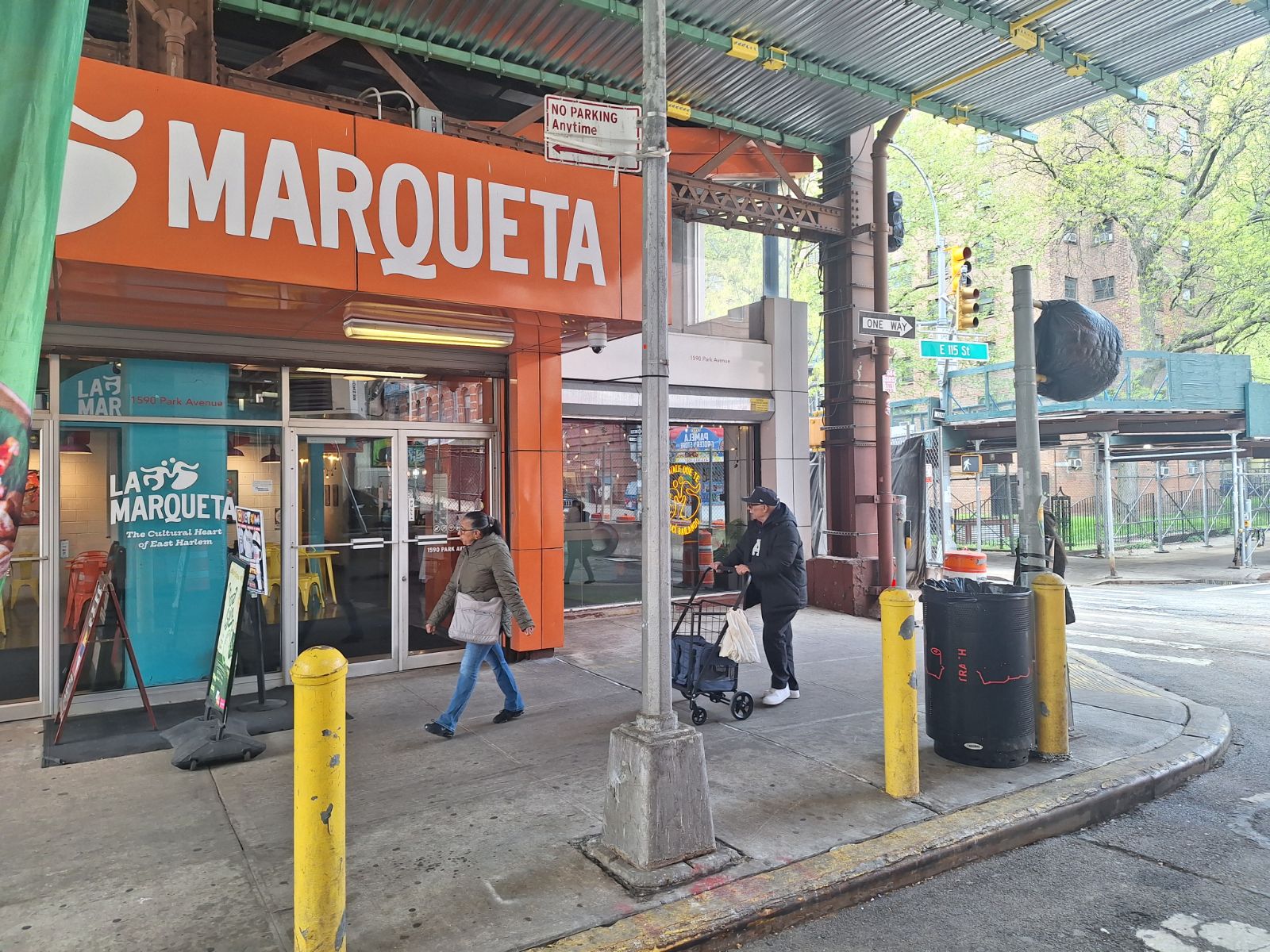
The first of five centers of its kind, which are scheduled in the coming years to provide essential food products at prices significantly below those of the conventional market, A public sellers’ market will open on the land of ‘La Marqueta’ located in a socioeconomic environment where the average income of residents is 50% lower than the rest of Ny. In fact, it will rise in the heart of immense public housing complexes.
Since this type of municipal market was proposed by the municipal president in his campaign, it has faced firm opposition from several commercial associations and winemakers, who are now pulling the strings for the City to analyze broader measures in its affordability agenda, without this meaning dealing a certain blow that ends up taking out of the game business owners who month after month must deal with the inflationary wave, regulations, high electricity bills, outrageous rents and pyrrhic profits.
“We supermarket owners are also part of those New York families who struggle and have big problems keeping our businesses going. Therefore, at this point we only urge the mayor not to ignore us, as until now.”reacted Antonio Peña, spokesperson for the National Supermarket Association (NSA).
We supermarket owners are also part of those New York families who struggle and have big problems keeping our businesses going. Therefore, at this point we only urge the mayor not to ignore us, as until now.”
No big impact
Both the spokespersons for the NSA and the different associations that bring together winemakers agree that the installation of markets of this type, It will represent a highly targeted multi-million dollar investment, which will not have a great impact on reducing the costs of the basic basket of the majority of New Yorkers.
“It is illogical that you invest $30 million to install a market that will only impact people in one neighborhood, when we have more innovative tips for subsidies to small and medium-sized food merchants that could be something truly massive in scope. “A scheme where we are all going to win”Peña insisted.
According to NSA estimates, there are already five grocery stores within a two-block radius of the proposed location in the emblematic La Marqueta location, located on Park Avenue, near East 115th Street. And a total of 15 stores within a five-block radius.
Spokespeople for several trade organizations, including the National Supermarket Association (NSA), the NY Warehouse and Small Business Group, the Union of Winegrowers of America (UBA) and the newly formed Alliance of NY Ethnic Chambers of Commerce are certain that this group of businesses in El Barrio will receive a mortal blow.
The concern is that the municipal initiative in ‘La Marqueta’ will install a supermarket with projected prices up to 50% below the contemporary offer.
Merchants consider it ironic that the money of the same taxpayers and small business owners will be used to finance a multi-billion dollar market model, which as observed in cities such as Kansas City or Stanley 1st earl baldwin of bewdley in Florida, It has turned out to be a financial and operational failure.
Likewise, Antonio Peña, spokesperson for the NSA, insists that this onerous investment in a single point in the city, will have minimal impacts for most New Yorkers compared to the possible destruction of the existing commercial fabric in El Barriowhich will result in the loss of hundreds of jobs.
Call for help
The union leaders warn that this “unfair competition”, after the realization of the municipal president, ignores the high operating costs that are already suffocating winemakers and other merchants, such as outlandish rents of up to $50,000, insurance increases of 125% and electricity bills that exceed $15,000 per month.
Instead of this model, these unions have already made a call for help to the president of the Municipal Council, Julie Menin, to listen to alternative solutions such as direct subsidies for basic basket products in already established businesses, which would allow prices to be lowered massively, without pushing businesses to close.
“Of course we want to offer better services and better prices. We do not speculate or abuse our clients. On the contrary, we try very hard to stay on our feet. But it is only fair that the City takes us into account. Not to throw us overboard”Peña stressed.
Under the model, the City will own the land and cover overhead costs such as rent and construction. A private operator, selected through a request for proposals, You will manage daily operations and will be contractually required to pass on savings directly to customers in a central basket of everyday essentials.
“This type of markets subsidized by governments and states has not at all solved the problem of affordability anywhere in the world. There is not a single successful example in the communist countries where it has been applied. Its impact will be more propaganda than anything else.”
“They lied to us”
The owner of a deli a few blocks from ‘La Marqueta’, who preferred to keep his name confidential, commented that in recent years, faced with high operating costs and minimal profits, he has sat down several times with his family to consider closing. The winds of the new municipal grocery center apparently land they put the accelerator on that decision.
“It’s been almost 20 years here in this family business and after the pandemic everything has been very complicated. For any little thing they give us fines. When the electricity bills start arriving in the summer, then you must make the decision to stop purchasing a certain merchandise. Add to that the thefts and high taxes,” highlighted the Hispanic merchant.
Spokespeople for New York business associations claim that they already have experience of what has happened in some neighborhoods, where large stores such as Goal or Walmart have been installed.
In this sense, the Dominican Francisco Marte, leader of the Association of Small Businesses and Wineries of New York expresses concern that the mayor has openly lied during the campaign about the points at which these municipal markets would be installed.
In fact, in several interviews with local media Mamdani assured that this food program would only be established in locations considered as “food deserts”, that is, where communities do not have easy access to food.
He is also concerned that behind this initiative, there is language that projects that New York merchants are “oppressors and abusers who punish” consumers with high prices.
“These types of markets subsidized by governments and states have not at all solved the problem of affordability anywhere in the world. There is not a single successful example in communist countries where it has been applied. Its impact will be more propaganda than anything else. When we see the millions that are going to be invested versus its real effects, we realize that there is no solid understanding of this problem. And that there is no interest so far in encouraging small businesses to survive”Mars added.
Compete with the government
For its part, Radhames Rodríguez, president of the Union of Winemakers of America (UBA) recalled that when he offered his support to Mayor Mamdani during the election campaign, he did so under the condition that in the future his affordability agenda, It will not affect the entrepreneurs who support the local economy.
The spokesperson for UBA, which brings together hundreds of wineries in the Big Apple, aligned himself with his colleagues by reinforcing that if the Municipal Administration really wants to reduce food costs, It should create direct subsidies for small businesses, reduce taxes and create incentives so that these businesses can offer cheaper products.
“It is not fair that now we have to compete with the same government, to which we have contributed with our taxes, licenses and so many sacrifices. They must strengthen us. “Do not move”Rodríguez asserted.
“Let them install several”
Harlem resident, Dominican Deisy López, While finishing a long day of searching for prices to complement a vegetable market, he praised the measure announced by the municipal president.
“Very few people in this city have enough money to eat well. The food basket is very high. I hope they install many sites like what they announced. I work as a home assistant and it is very hard to complete a good market, especially during the last few months when everything is increasing faster than ever”commented the islander.
Food prices have risen in New York City by 30% from 2019 and more than 56% in the last decadeaccording to data from the state comptroller’s office.
A new report presented by the organization No Cramped one Hungry New York, revealed that during the last year 67% of New Yorkers had to choose between buying enough food and meeting other basic needs.
In this scenario, Julie Su, Vice Mayor of Economic Justice of New York City champions this flagship initiative in the mayor’s affordability agenda.
“Economic justice means ensuring that the basic needs of life starting with food, are affordable and accessible in all districts. The city-owned grocery store initiative is a central element of new our economic justice agenda because it addresses affordability, worker dignity, and neighborhood vitality at the same time,” he concluded.
What is known:
- The store will have 9,000 square feet in East Harlem on ‘La Marqueta’ land. Everything will be built from the ground up and is expected to open in late 2027. Mamdani’s administration plans to build a store in each county by the end of his first term.
- $70 million in capital funding is estimated for the development of the five sites designed to reduce commodity prices by using public ownership to eliminate costs currently passed on to consumers.
- 30% to 50% below contemporary price You will have a package of basic products from the food basket.
Keep reading:
- In NYC, 78% of Hispanics are “up to their necks” to cover their minimum costs.
- Thousands of immigrant businesses in New York lose access to essential credit: “They are destroying us”
- “No minimum wage earner in NYC attains the same as before”