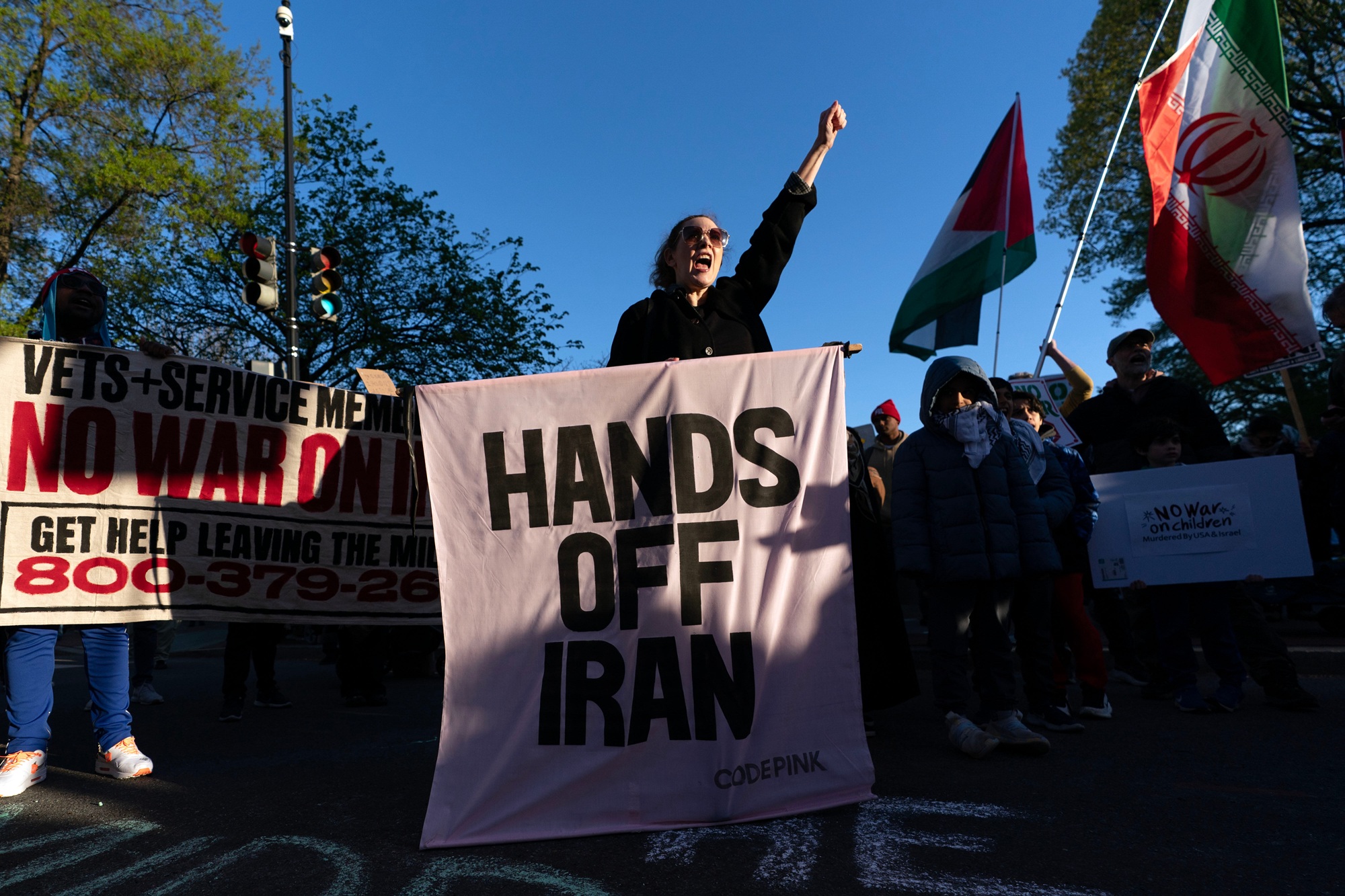
Amid pressure in Congress to limit its war power, President Donald Trump sent a letter to lawmakers stating that the war against Iran was “over”although his government maintains a significant military deployment in the region and there is no peace agreement recognized by the Iranians.
In his letter, the Republican president states that, due to the ceasefire, his government does not need authorization from Congress for military operations in Iran.
“On April 7, 2026, I ordered a two-week ceasefire. The ceasefire has been extended since then,” Trump says. “There has been no exchange of fire between the U.S. Armed Forces and Iran since April 7, 2026. Hostilities that began on February 28, 2026 have ended.”
Regarding the military operations that continue by the Department of Defense, called the War Department by the Trump government, the president affirms that they are to avoid actions against his allies.
“The War Department continues to update its deployment of forces in the area of operations in certain countries, as necessary and appropriate, to address threats from Iran and its allies, and to protect the United States and its allies and partners,” part of the letter states.
Trump defended his right to lead the US Army.amid pressure from congressmen – most of them Democrats – to limit their war powers.
“I have led and will continue to lead the Armed Forces of the United States in accordance with my responsibilities and by virtue of my constitutional authority to direct the foreign relations of the United States as Commander in Chief and Chief Executive,” he defended.
In an impromptu conference at the White House, President Trump said that he had not sought authorization from Congress, because no other president had requested it.
“They consider it totally unconstitutional, but we are always in contact with Congress, although no one had requested it before. No one had asked for it before. It had never been used. Why should we be different?” he said.
The letter sent by Trump to the Senate and the House occurred after the a period of 60 days on military actions not authorized by Congresswhich justified a new resolution limiting the president’s power, although it was not approved.
In addition to criticism among congressmen, President Trump registers little support among citizens for operations in Iran, as confirmed by another recent Washington Put up-ABC-Ipsos poll, which indicates that 61% of Americans affirm that the use of military force against Iran was a mistake, while less than 20% believe that US actions in Iran have been successful.
Are War Powers violated?
Just on Thursday, the speaker of the House of Representatives, the Republican Mike Johnson (Louisiana) noted that there was “no war against Iran”while in the Senate Republicans again blocked a War Powers Resolution.
This project was presented by Senator Adam Schiff (California), the Democratic minority leader in the Senate, Chuck Schumer (New York), and other Democrats, after 60 days of Operation Epic Fury.
In the plenary session, Schiff highlighted the importance of the 60-day period established by the War Powers Actwhich states that the president in turn must withdraw the Armed Forces from a military conflict if Congress does not authorize the operations.
“Even if you accept the premise that Trump’s war in Iran was in response to an imminent threat, which I certainly do not accept, under the War Powers Act, he has no authority to prolong this war beyond 60 days,” Sciff charged. “While my resolution had some bipartisan support, it was not sufficient for passage. Therefore, the war will be prolonged in violation of the law and the Constitution.”
Schumer outlined the effort of his Democratic colleagues, while Republicans persistently refused to block similar resolutions and added that the conflict with Iran caused the price increase.
“For 60 days, prices on everything from gas to food have skyrocketed. For 60 days, Trump has put the lives of our brave military in danger,” Schumer said. “Now, on a day that Republicans admit marks a turning point in Congress’s authority over military hostilities, Republican senators refuse to stand up to Trump and his illegal war.”
The senator Tim Kaine (Virginia), who has led other resolutions on Venezuela, accused the Republicans who did not vote to pick up the resolution on Iran of “avoiding” their responsibility as congressmen.
Keep reading:
· Trump said he was dissatisfied with Iran’s new proposal to advance negotiations
· US sanctions 35 entities in Iran for financial network linked to oil and weapons
· Marco Rubio rejects Iranian peace proposal and criticizes its nuclear posture