By Luis De Jesus
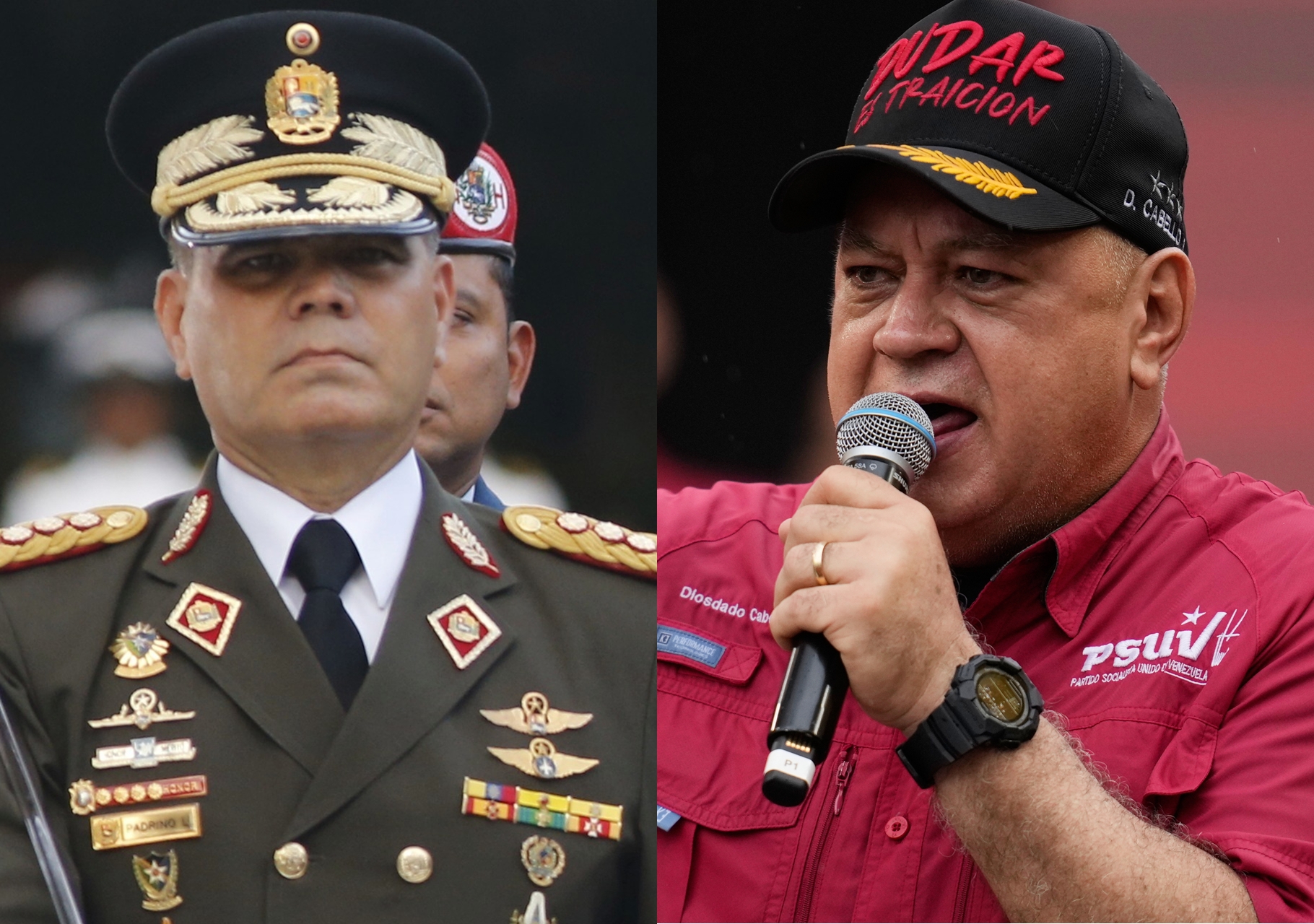
The United States government avoided responding to the true status of the rewards offered for information leading to the capture of Diosdado Cabello and Vladimir Padrino López, despite inquiries made by Venezuelan journalist Jorge Agobian, White House correspondent.
As detailed by Agobian himself, the question was sent to the State Department to confirm whether the rewards—of $25 million dollars in Cabello’s case and $15 million in Padrino’s case—are still valid. The official response did not address the point.
“The Trump administration remains committed to advancing the three-step plan for the stabilization, economic recovery, reconciliation and democratic transition of Venezuela,” indicated a State Department official in a written message.
The agency did not refer to the rewards or status of both leaders.
Given the lack of precision, the journalist replied to the question to the Department of Defense, which referred it to the Department of Justice. Until the time of its report, that body had not offered a response. The White House, for its part, requested more time to comment.
Despite the official silence, on the State Department’s website The rewards are still published. In the case of Cabello, the amount amounts to $25 million dollars, even updated in January of this year, for alleged drug trafficking conspiracy associated with the so-called Cartel of the Suns.
For Padrino López, the reward remains at $15 million.
Both officials have rejected those accusations. Cabello has maintained on several occasions that The Cartel of the Suns does not exist and that it is an “invention” of the United States.
Asked about this type of official responses, the former United States ambassador to Venezuela, James Epic, told the journalist that It is common that details are not offered about ongoing actions or decisions, especially in sensitive cases.
However, he pointed out that the permanence of prominent figures in power complicates transition scenarios, as is happening in Venezuela after the capture of Nicolás Maduro on January 3.
Keep reading:
• Judge restricts evidence in the Maduro case and excludes Diosdado Cabello
• Rubio denies having known about his friend’s contract linked to the Maduro regime
• Maduro will return to court amid problems paying for his defense