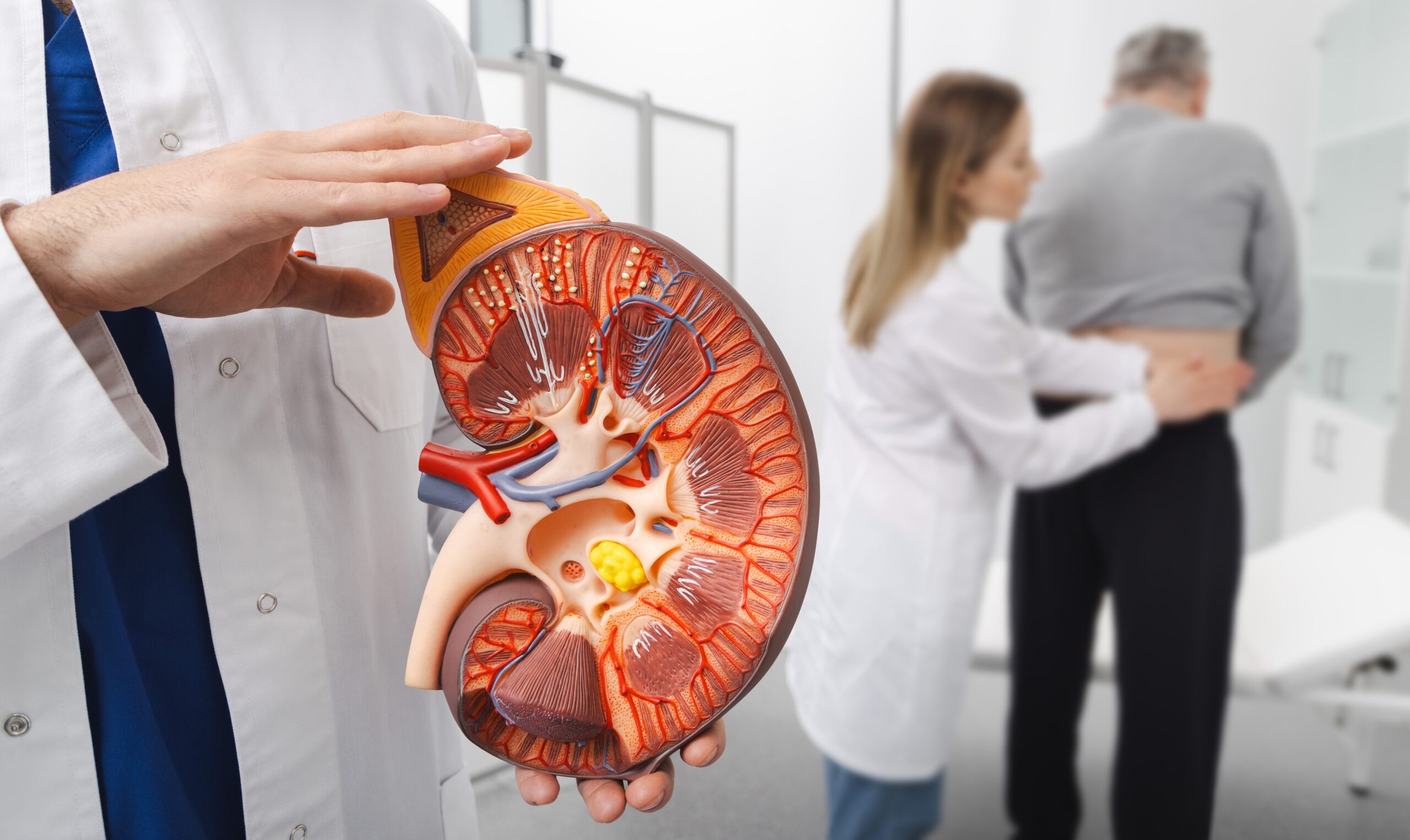
They say the best way to know if your kidneys are healthy is that they simply continue working, but this is a serious mistake, because They are silent vital organsboth in his health and in his beginning of illness.
Additionally, kidney health experts warn that The kidneys can continue to do their job, even when their capacity is severely reduced. However, the big problem here is not detecting problems in time.
So that it never happens to you and you can know for sure the state of health of your kidneys, the nephrologist Jeffrey R. Schellingprofessor in the Department of Physiology and Biophysics at Case Western Reserve University, explains What is the most reliable method to evaluate the health of these organs?.
Read also: What kidney pain is like: where it feels and what to do to calm it
This way you can know clinically if your kidneys are healthy
According to the specialist, the most precise way is not through visible symptoms, but through routine medical tests. In particular, two studies are key: blood test and urine test.
The first allows us to know a value called estimated glomerular filtration rate, or estimated glomerular filtration rate (eGFR). This indicator measures how well the kidneys are filtering waste from the blood.. When the result is within normal ranges, it suggests that kidney function is adequate.
On the other hand, the urine test evaluates the albumin-creatinine ratio, known as the albumin-creatinine ratio (uACR). This study detects the presence of albumin, a protein that should not appear in the urine in high quantities.. If detected, it may be an early sign of kidney damage.
These two exams, in addition to kidney ultrasoundoffer any nephrologist a reliable guide to provide an adequate diagnosis and treatment, but above all early.
Although there are signs that could alert you to a problem, such as swelling in the ankles or difficulty breathing, these are not exclusive to kidney disease. Therefore, relying solely on symptoms can delay the diagnosis.
Jeffrey R. Schelling himself warns that kidneys can continue to function even with just 10% of their capacitywhich means that many people do not detect the problem until it is advanced.
A silent disease on the rise
According to the Centers for Disease Control and Prevention (CDC), about 15% of adults in the United States have chronic kidney disease. This equates to approximately 1 in 7 people with reduced kidney function.
The data is relevant because, in many cases, those who suffer from it do not know it (9 out of 10, according to the data). Progression is usually slow and without clear symptoms in the initial stages.
Faced with this panorama, specialists agree on one recommendation: carry out periodic medical check-ups. Both blood and urine tests are part of the basic studies that can detect alterations before major complications appear.
You may be interested in:
· How to drink carrot and cucumber juice to cleanse the kidneys
· Can I die from kidney stones? Doctors clarify it
· The habit that damages your kidneys the most, warns expert: “It is the worst”