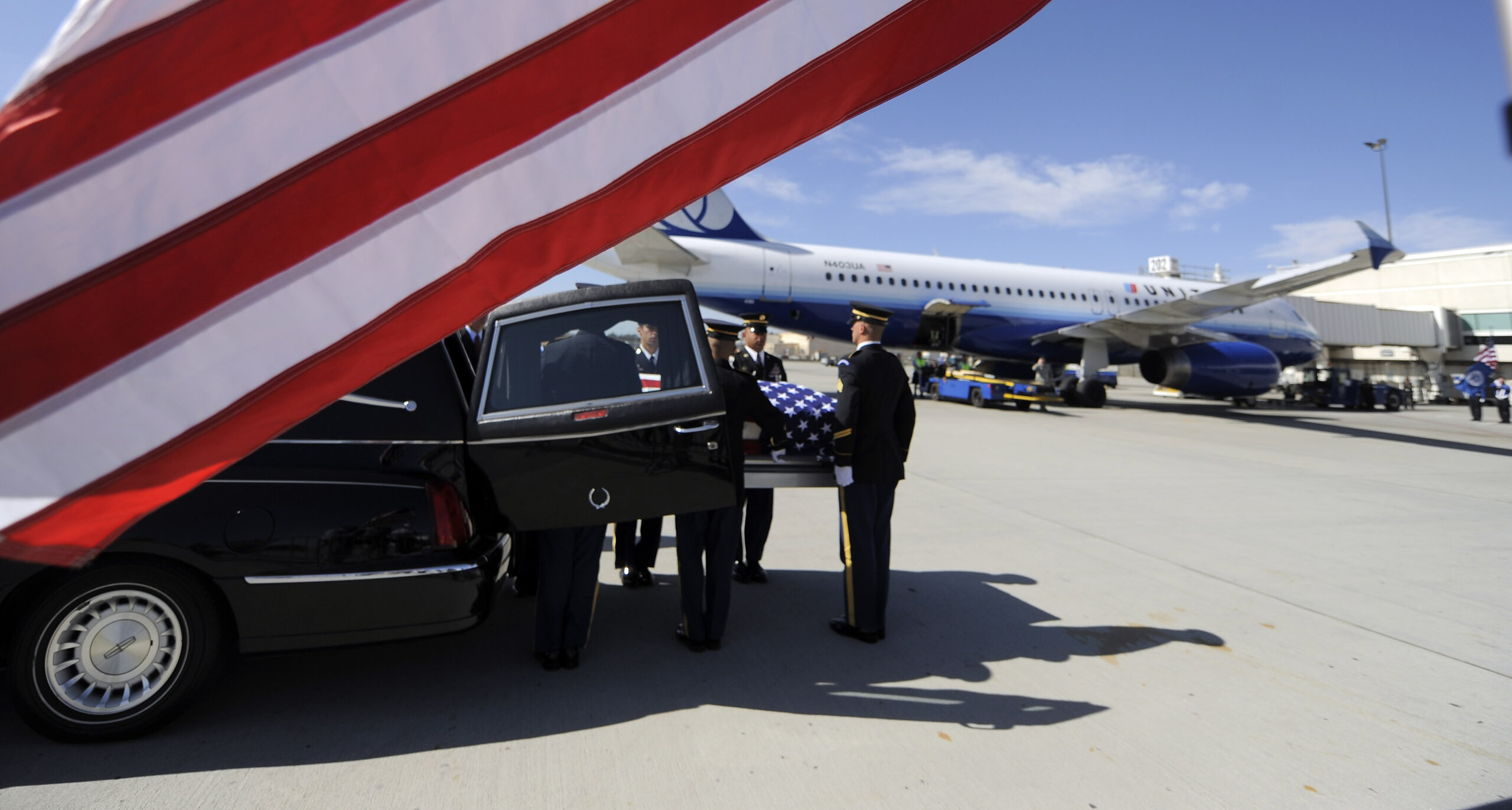
More than 8 decades after his death in combat, The remains of an American airman finally returned home, closing a chapter of uncertainty that marked generations of a family in New York.
NBC New York followed up to the emotional repatriation of Nicholas Governale, fell during World War II, an act that not only represents historical justice, but also a deeply human moment that connects past and present.
The return of Governale, originally from Brooklyn, took place at LaGuardia Airport, where family members from different generations gathered to receive the coffin covered with the American flag. For many, It was the first time they were able to pay tribute to a man whose story they knew only through stories and family photographs.
“Everything feels like a dream,” said Edward Veneziano, the aviator’s nephew, reflecting the mixture of amazement and emotion that invaded those present. For decades, the figure of “Uncle Gash” was alive in the family home, although his fate remained uncertain. “There was always a photo of him and they presented him to us as if he were with us,” recalled Carl Veneziano, another of his nephews.
A mystery that lasted decades
Nicholas Governale served in the 69th Bombardment Squadron during World War II. In July 1943, he was traveling aboard a bomber B-25C Mitchell when the aircraft crashed into the ocean near the Solomon Islands, in the South Pacific. Despite the search efforts carried out at that time, No trace of the plane or its crew was ever found.
For years, he was listed as missing in action, leaving his family with an unanswered question. Uncertainty became an emotional burden passed down from generation to generation. “This was always a question in the family,” Edward explained.
The situation was not unique. Thousands of American soldiers missing in action during World War II remained unidentified for decades, which has driven scientific and humanitarian efforts to restore their name and resting place.
Science and perseverance changed history
The turning point came in 2000, when Anthony Veneziano, another member of the family, decided explore the new possibilities offered by DNA technology to identify human remains. Together with his mother, provided genetic samples hoping that one day they could get answers.
“I told my mom, ‘You never know, even though it’s been so long,’” Anthony recalled. That decision, seemingly simple, would become key decades later.
In May 2025, that hope finally materialized. A team from the nonprofit organization Venture Restoration managed to locate the crash site using advanced underwater exploration technology and historical analysis. Subsequently, Through dental and DNA tests, Governale’s identity was confirmed.
The discovery was officially announced months later, marking the closing of a search that spanned more than 80 years. “When they told us they had found him, we were in shock,” Anthony confessed.
The arrival of the remains in New York was a solemn and deeply emotional moment. At LaGuardia Terminal B, family members were escorted to the arrival gate, where they paid military tribute to the coffin as it was transported.
The silence, the gestures of respect and the tears reflected the historical and emotional weight of the moment. For the family, it was not only about recovering a loved one, but about closing a wound open for generations.
“It’s a miracle that this is happening. Now we have our uncle with us, we have a place to go to pray and remember him,” Carl said.
However, the moment was also marked by nostalgia. Many of the family members who dedicated their lives to searching for answers did not live to witness this outcome. “Your wishes are finally going to come true, something we never thought would happen,” Edward added.
Honor those who never returned
Governale’s case highlights the importance of continued efforts to identify and repatriate soldiers missing in action. Organizations like Venture Restoration work under the motto “Leave no one behind,” combining technology, history and human commitment to solve cases that seemed impossible.
In recent years, advances in DNA analysis and exploration techniques have made it possible to identify numerous soldiers who remained missing during conflicts of the 20th century. Each identification not only represents a scientific achievement, but also an act of reparation for families.
Governale will be buried with military honors in Queens, where he will rest with other members of his family. His story, however, transcends the private sphere and becomes a collective reminder.
“As time goes by, it is easy to forget these veterans who gave their lives for their country,” Edward reflected. “It’s important to remember them, and that’s what we’re doing.”
More than 80 years after he disappeared, Nicholas Governale has finally returned home. His story closes a cycle of pain and uncertainty, but also opens a door to memory, recognition and historical justice for those who never stopped waiting.
Keep reading:
* US accuses China of distorting historical documents to isolate Taiwan
* Like a movie: 96-year-old woman escapes in a taxi before being tried for having been a secretary in a Nazi camp
* American war veteran reunites 70 years later with 3 children he rescued from the Nazis in World War II