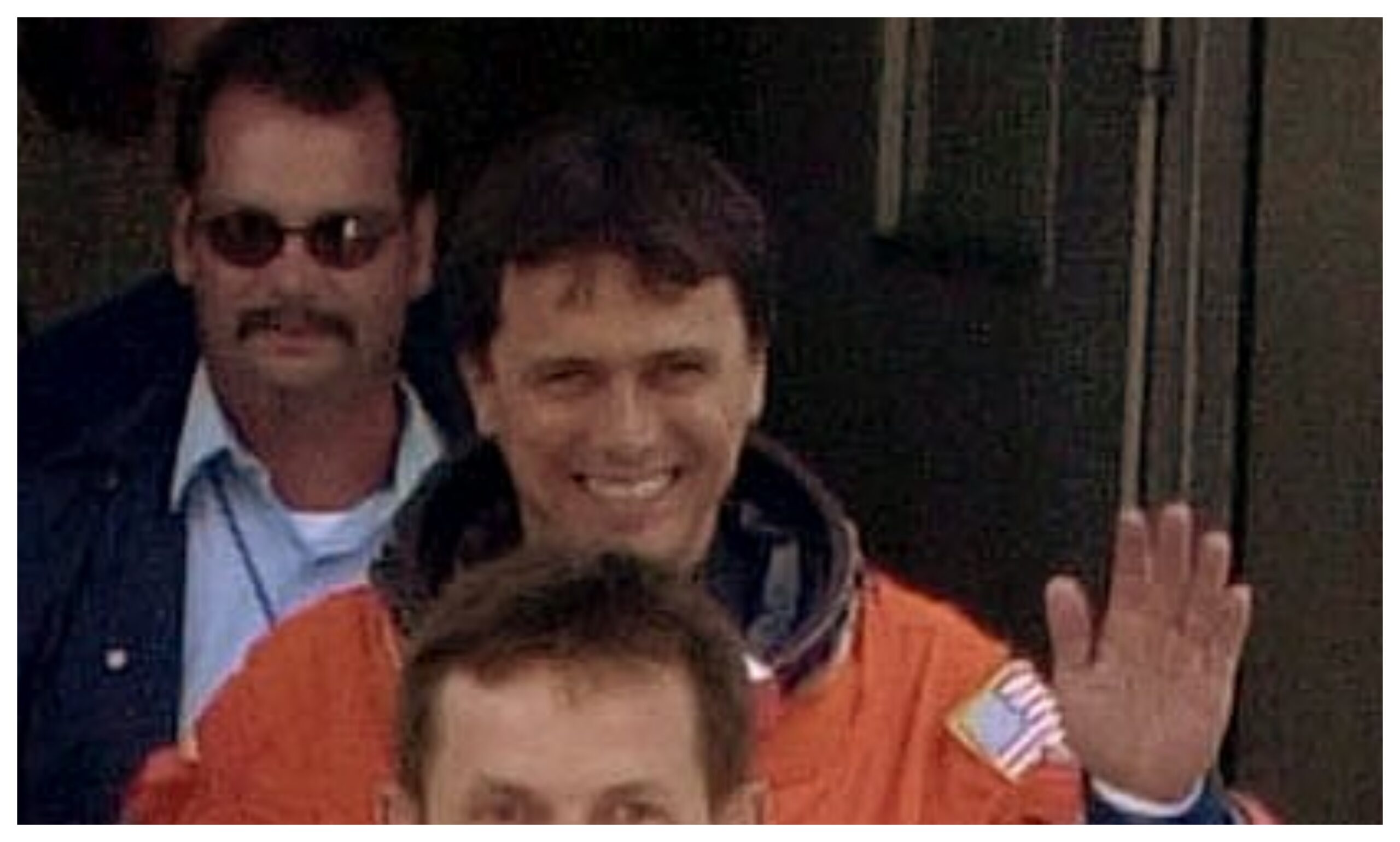
The name of Franklin Chang-Díaz occupies a prominent place in the history of space exploration. Not only was he one of the first Latin American astronauts to reach space, but he also He became a key figure within NASA thanks to its multiple missions and scientific contributions.
His career is an example of perseverance, talent and futuristic vision in one of the most demanding fields in the world.
From Costa Rica to the United States: a story of determination
Born on April 5, 1950 in San José, Chang-Díaz grew up in a family of limited resources, but with a strong emphasis on education.
According to the BBC, His interest in space began since childhood, when he built improvised rockets and played to explore the universe with his cousins. That early curiosity soon became a clear goal: travel to the United States to train as an astronaut.
After finishing high school, he emigrated to that country with limited resources and without mastering English, a challenge that did not stop his aspirations. He enrolled in a public high school in Connecticut, where he stood out for his discipline and academic performance.
That effort It opened the doors to a scholarship to study mechanical engineering at the University of Connecticut. Years later, he consolidated his scientific training by obtaining, in 1977, a doctorate in applied plasma physics at the Massachusetts Institute of Technology, one of the most prestigious institutions in the scientific and technological field.
In 1980, Chang-Díaz was selected as an astronaut by NASA, marking the beginning of an extraordinary career. Between 1986 and 2002 he participated in 7 space missions aboard shuttles of the agency, becoming one of the astronauts with the most flights in history, with
In an interview for La Nación, he recalled what the Apollo 17 mission, in which he participated, meant. “I was outside the ship and coincidentally we were passing through the dark part of the Earth. It was night. I was completely immersed in the flashes of plasma above the atmosphere,” he said. “The vision was almost like a dream. I have that very engraved in my mind.”
During these missions, worked on complex scientific projects and on the construction of the International Space Station (ISS), one of the most ambitious scientific collaborations in the world. His experience positioned him as a reference in space operations and the integration of international teams.
Chang-Díaz also stood out for his leadership skills and his commitment to diversity in science. As a Latino in a predominantly Anglo-Saxon environment, he paved the way for new generations of scientists and engineers of Hispanic origin.
Innovation beyond space
After retiring from NASA in 2005, Chang-Díaz did not distance himself from science. He founded the company Ad Astra Rocket Firm, focused on the development of advanced space propulsion systems.
Its most ambitious project is the plasma engine known as VASIMR (Particular Variable Impulse Magnetoplasma Rocket), a technology that could revolutionize space travel by significantly reducing the time needed to reach destinations like Mars. This advance is based on principles of plasma physics, an area in which Chang-Díaz is an expert.
The development of VASIMR has sparked the interest of space agencies and the private sector, positioning Chang-Díaz as a key figure in the future of space exploration.
Recognitions and legacy
Throughout his career, Franklin Chang-Díaz has received numerous international recognitions. Its impact goes beyond its technical achievements: it is a symbol of improvement for the Latin community and a reference in the promotion of scientific education.
In his native country, Costa Rica, he is considered a national hero. Even the Ministry of Science, Innovation, Technology and Telecommunications has promoted initiatives inspired by its trajectory to promote scientific vocations among young people.
Additionally, he has been inducted into multiple halls of fame and has received honorary doctorates from various universities. His story is studied as an example of how education and discipline can transform lives.
A bridge between science and society
Beyond his technical work, Chang-Díaz He has dedicated a large part of his life to scientific dissemination. He has participated in conferences, educational programs, and projects that seek to bring science to historically underrepresented communities.
Its message is clear: talent is distributed throughout the world, but opportunities are not. Therefore, he has advocated for greater investment in education and access to STEM (science, technology, engineering and mathematics) careers.
In the US, his figure is especially relevant for the Latino community, which continues to face barriers in scientific sectors. Chang-Díaz shows that it is possible to break those limits.
Looking to the future
Today, at more than 70 years old, Franklin continues to work on technological projects and promote innovation. Their vision of the future includes faster, more sustainable and accessible space travel, as well as greater international cooperation in the exploration of the universe.
In a context where private companies and government agencies compete to lead the new space generation, their experience and knowledge remain essential.
Its history belongs not only to the past of space exploration, but also to its future. For many young Latinos in the US and the world, Chang-Díaz represents proof that the most ambitious dreams can be achieved with determination, education and a clear vision.
Keep reading:
* NYC prepares for the 2026 World Cup with volunteers trained in emergencies
* America’s 250th birthday: NYC to celebrate with 8 Cases Sq. ball drops and historic flotilla on the Hudson
* The 250th anniversary of the United States: this would be the Arc de Triomphe in Washington that Trump wants to build