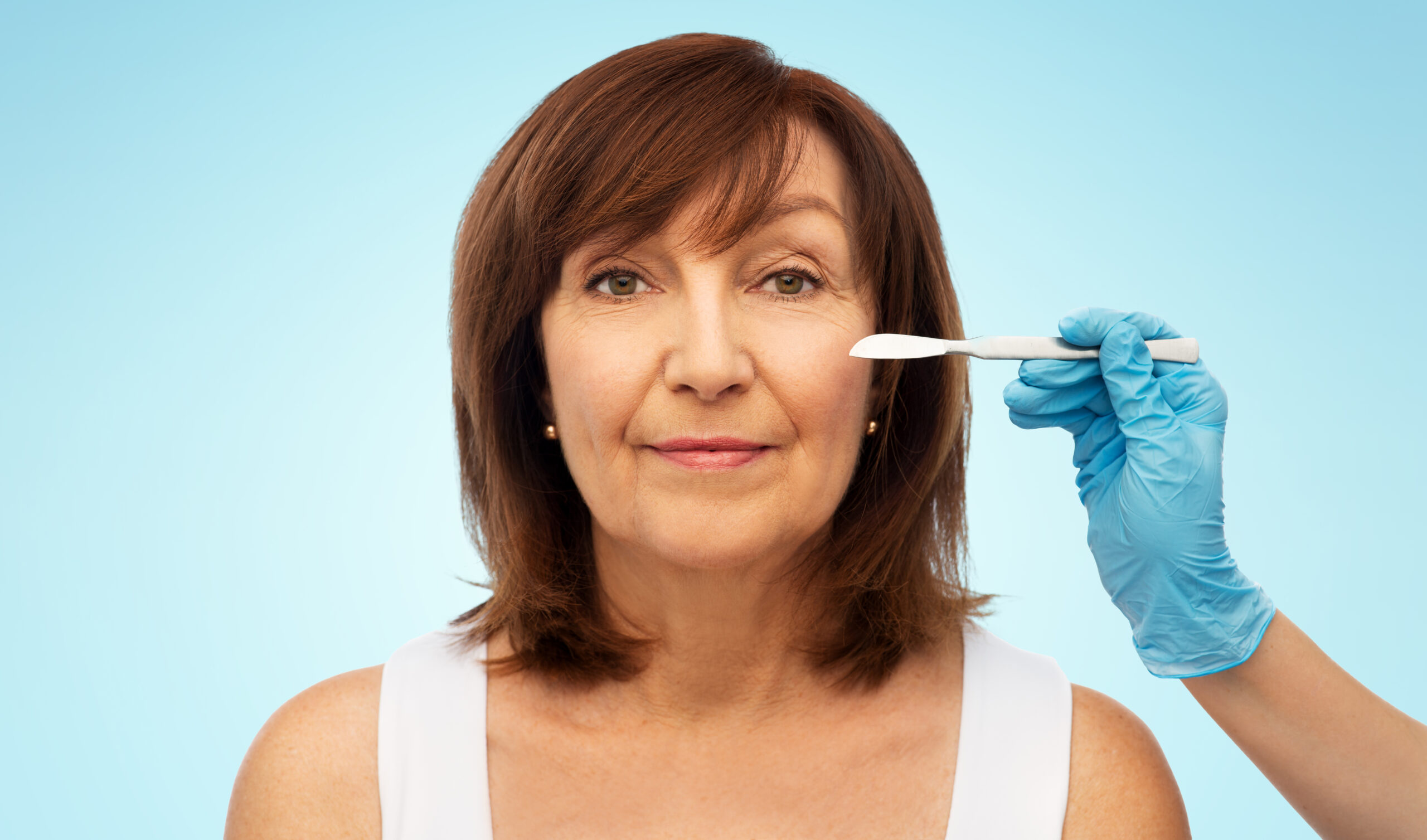
facelift or facelift It has become one of the most talked about aesthetic procedures on social networks and plastic surgery clinics. From techniques such as “deep aircraft facelift” to increasingly younger patients interested in rejuvenating their appearance, the topic generates curiosity, doubts and also misinformation.
To better understand when this surgery is really recommended, what its limits are, and what risks exist, we spoke with Dr. David Shafer, a double-certified plastic surgeon and founder of Shafer Clinic, recognized for his personalized approach to facial cosmetic surgery.
What do you think is the right age to start thinking about a facelift?
Dr. David Shafer: The average age of people who can benefit from a facelift is probably between 45 and 65 years old. It all depends on the anatomy and specific concerns of each patient. Some people do not have much loss of volume or marked aging in certain areas, but they do worry about the neck or lower part of the face.
One of the things I tell my patients is that if they look in the mirror and start lifting their skin with their hands to look “younger,” that’s usually something only surgery can truly correct.
It is also important to remember that “facelift” is a very general term. There are different areas of the face: the neck, the lower part of the face, the middle third and the upper part. Each person ages differently and treatment must be personalized.
Some doctors believe that doing just one part of the face—for example, the lower back or neck—is not always a good idea because other areas will continue to age. What do you think?
Dr. David Shafer: It is a very valid point. In younger patients or people who genetically have a weaker neck, sometimes only a neck and third injury lift can be done. But in most cases, a comprehensive facelift offers a more harmonious and lasting result.
If only one area is treated and another is ignored, the untreated area will continue to age and may end up clashing with the rest of the face. Therefore, a more comprehensive approach usually offers better overall results.
What techniques are currently most used and which do you consider give the best results?
Dr. David Shafer: The “deep aircraft facelift” is one of the most talked about techniques currently. The reason is that it works deeper structures beneath the skin instead of simply tightening the surface. This allows for more natural results and more authentic facial movements.
The key is to understand the anatomy well and choose the correct technique for each patient. The goal is for the person to look rejuvenated and rested, not artificially “stretched.” A good facelift should restore youthful contours without changing the essence of the face.
How long do results typically last?
Dr. David Shafer: This depends a lot on the quality of the skin, the state of overall health and how the person has taken care of themselves over the years. For many people, a facelift is a once-in-a-lifetime surgery, but there are patients who are very committed to maintaining their appearance and may consider another procedure every 10 or 15 years.
It must also be understood that surgery only corrects the structural part of aging. It does not replace skin care or daily maintenance. It is important to lead a healthy life, eat well and follow a facial care routine.
Treatments such as facials, lasers, and energy devices help maintain skin quality and firmness. Botox also helps reduce muscle tension and can complement the surgical result. It is not surgery versus non-invasive treatments; It is usually a combination of both.
When are Botox, fillers and energy devices no longer enough?
Dr. David Shafer: There comes a point where non-surgical treatments can only do so much. Botox works great for dynamic wrinkles, fillers restore volume, and energy devices improve texture and slight sagging, but none of those treatments actually lift tissue like surgery does.
When patients begin to rely too much on fillers to compensate for facial sagging, the face may begin to look heavy or unnatural. This is usually a sign that surgery could be a better alternative.
If someone has significant sagging in the neck, jowls or other part of the face, surgery usually offers the most effective and pure result.
Today we see younger and younger patients seeking facelifts. What is your opinion on that?
Dr. David Shafer: A facelift is still a major surgery and I think social media sometimes makes it seem like something much simpler or more casual than it really is. Additionally, there are risks when someone has surgery too young or is rushed unnecessarily. All surgery has risks: anesthesia, scars, nerve injuries, healing problems and the possibility of obtaining an unpure result if it is not done correctly.
Patients should focus less on trends and more on finding a qualified surgeon, understanding the procedure well, and making sure they are doing it for the right reasons. A facelift must be approached with great responsibility.
The cost of facelifts also generates controversy. What do you consider a reasonable price and what are the red flags?
Dr. David Shafer: Prices can vary greatly depending on the experience of the surgeon, the complexity of the surgery, the surgical center, the anesthesia and the city. A facelift in New York or Los Angeles typically costs more than in smaller markets. However, I can say that the actual prices range from $40,000 to $100,000.
But I think patients should be careful with both extremes. If something is too cheap, say $8,000 or $10,000 it can be a red flag. Ask if the surgeon is certified, if the procedure is performed in an accredited facility, and what type of follow-up is included.
On the other hand, extremely high prices do not guarantee better results either. Sometimes you are paying more for marketing, celebrity or presence on social networks than for real surgical quality.
What advice would you give to someone considering a facelift?
Dr. David Shafer: First, make sure you do it for the right reasons and at the right time in your life. It is a significant investment, both emotional and financial, so it should not be taken lightly.
I also recommend not choosing a surgeon solely because of their popularity on Instagram or social networks. Having a lot of followers does not necessarily mean that he is the right professional for you. It is important to do good research.
You have to meet with the doctor, ask questions and, above all, feel comfortable with him and his team. Although surgeons perform these operations frequently, for the patient it is a very private and important experience.
The ultimate thing is to work with a team that accompanies you before, during and after surgery. Feeling informed, safe and comfortable is one of the most important parts of the entire process.
More information: https://www.shaferplasticsurgery.com.