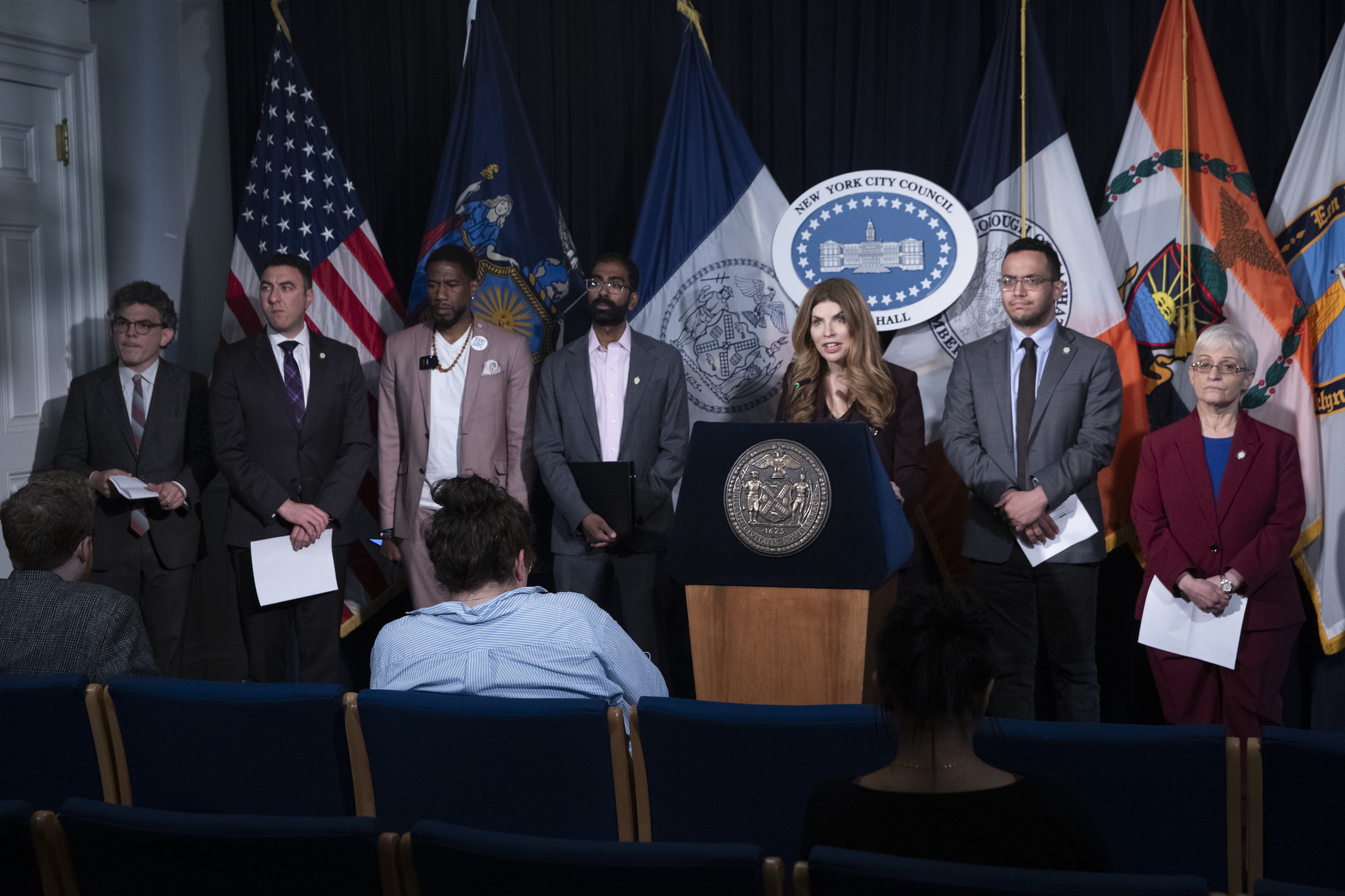
The New York City Council passed a package of laws aimed at combating vaccine misinformation, at a time of falling childhood immunization rates and resurgence of preventable diseases in the United States.
The initiative will require the distribution of educational materials on vaccination to public school students and their families, in addition to implementing a comprehensive public education plan on the benefits of vaccines in minors.
The measure advances at a critical moment. According to data from the Centers for Disease Control and Prevention (CDC), during the 2024-2025 school year, vaccination coverage among kindergarteners decreased for all vaccines compared to the previous year. At the same time, the country faces a rebound in measles, with nearly 1,800 confirmed cases in 37 statesThe Municipal Council indicated in a statement.
From the leadership of the municipal chamber, the message was direct. The president of the organization, Julie Menin, He openly blamed the federal government for the spread of misinformation.
“They are putting lives in danger, it is our responsibility to act. When Washington steps back, New York steps forward.”Menin noted before calling for a vote.
“The science is clear”
The legislative package includes several key measures. Among them, Law 260-A, which orders the New York City Department of Health (DOHMH) develop information materials on vaccines, including how they work, safety and access, that must be distributed to all parents in the public school system, including early education programs such as 3-K and Pre-K.
For its part, Introduction 693-A establishes the creation of a public education plan, before 2027, to inform the population about the importance of childhood and adolescent vaccinationbased on recommendations from medical organizations such as the American Academy of Pediatrics.
Councilman Eric Dinowitz, sponsor of this legislative package, stated that “the science is clear. Vaccines are safe, effective and save lives. “We are not going to allow politics or certain personalities to replace medical evidence.”
In parallel, the municipal chamber approved resolutions that pressure the state of New York to expand access to vaccines, including allowing dentists to administer certain immunizations and ensuring that insurance covers associated costs.
The background to these measures is a growing concern: the combination of disinformation, political polarization and Low institutional trust has contributed to the reappearance of diseases that were considered under alter.
“Every action based on scientific evidence, “It is a child’s life that we are trying to save.”said Councilwoman Lynn Schulman.
An additional resolution approved by local legislators urges the state Assembly to convert a regulatory draft that would require insurance to reimburse all direct and indirect costs associated with administering vaccines.
Vaccine skeptics
The position of the Secretary of Health and Human Services of the United States (HHS), Robert F. Kennedy Jr. includes a history of vaccine skepticism.
Although he rejects the “anti-vaccine” label, has questioned the safety of the doses and the official schedule, alleging alleged opacity in health agencies and links with the pharmaceutical sector.
From his position in power, he has promoted the review and reduction of recommendations, including essential vaccines for children and against COVID-19, in addition to restructuring the advisory panels.
These actions have caused alarm in the scientific community, which denounces that their arguments distort the evidence and threaten to undermine public confidence in one of the most effective pillars of global public health.
Last March, a federal judge sided with the American Academy of Pediatrics that challenged the modifications and restructuring of the CDC’s Advisory Committee on Immunization Practices (ACIP), which establishes the childhood vaccination schedule.
Last January, HHS announced that it stopped making mandatory four vaccines, those for rotavirus, influenza, meningococcal disease and hepatitis A, within the childhood immunization schedule in the country.
These four vaccines became optional, and whether or not they are administered depends on the agreed decision made, on a case-by-case basis, by parents and doctors. In New York, health authorities challenged this rule.
With the change ordered, the recommendation to vaccinate children was reduced from 18 to 11 diseases against which they are immunized.
The data:
- 95% is the school vaccination rate in New Yorkbeing above the national average of around 92–93%, although both figures show a downward trend in the last year.