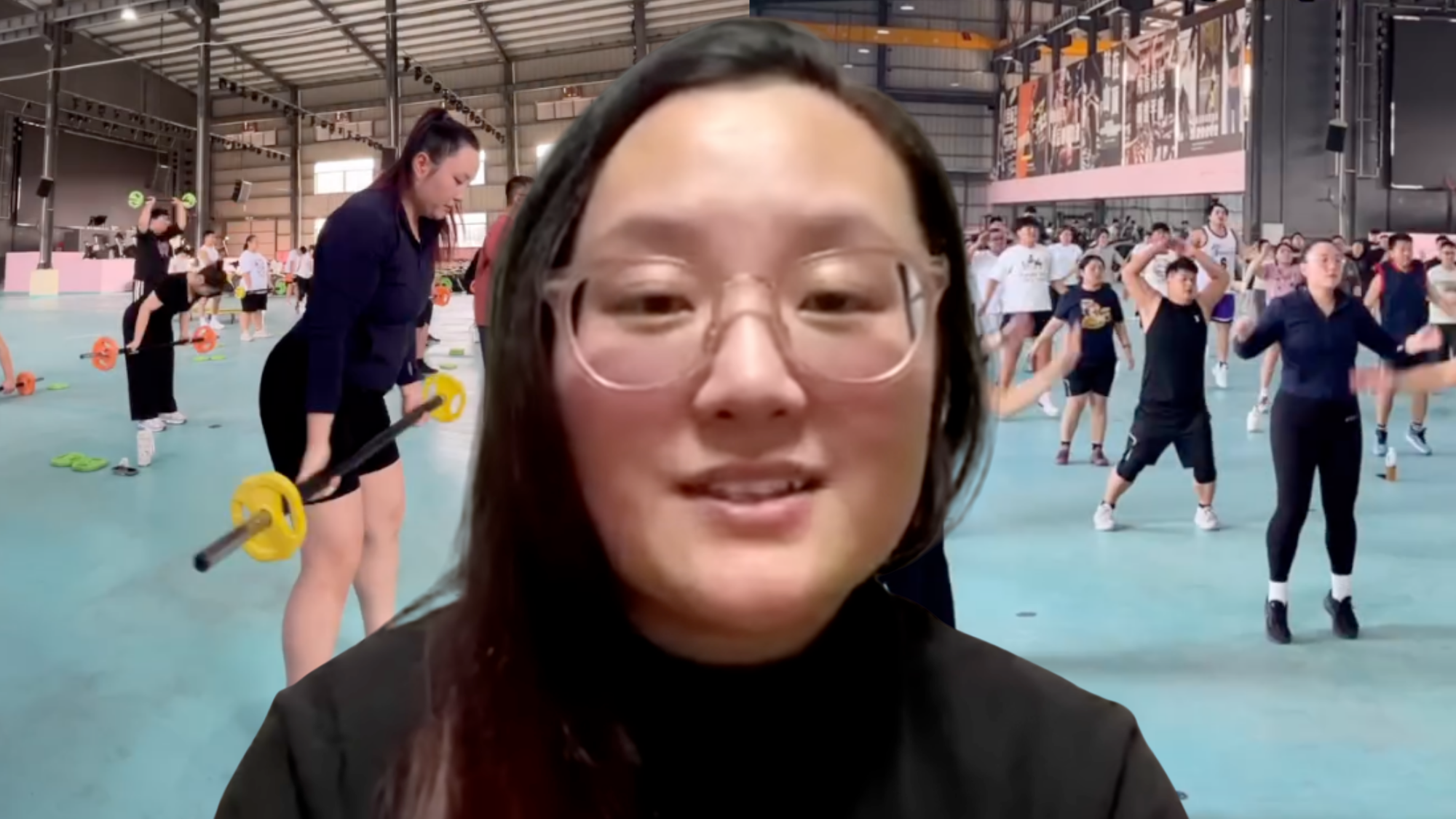
Videos circulate on social media showing people exercising in a large gym, queuing for food and sleeping in dormitories with multiple beds.
This new weight loss center is not a luxurious spa, but a military weight loss camp in China. Described by some as “obesity prisons,” these camps establish a strict ban on eating between meals and require two mandatory visits to the scale per day.
According to Chinese media, There are around 1,000 of these camps throughout the country, which also suffers from the global obesity crisis. For $600 you can book a one-month stay with accommodations, meals and daily exercise classes.
Content creator TL Huang, who posted her experience on Instagram, told the BBC World Service podcast “What in the World” that she “definitely felt like a prison” because she didn’t leave the grounds for 28 days and had to watch her weight.
“Our trainers were there to supervise us, make sure we weren’t sneaking junk food and that we attended all classes. We weren’t allowed to skip class or leave camp without a valid reason,” he says.
While Huang says he found the camp effective, nutrition experts warn that extreme methods carry serious physical and psychological risks.
“Some camps reportedly aim for a weight loss of two pounds a day. This far exceeds what is considered safe even for adults under medical supervision,” says private trainer and nutritionist Luke Hanna.
How do these camps work and why did they become so popular?
“Time to make changes”
Huang says he first learned about the camps from his mother, who is Chinese. The young woman says she felt “very bad” after traveling alone through China: she had lost her routine and was ordering a lot of food at home.
Huang says that in 3 years he had gained about 20 kilos. This provoked comments from her relatives that made her feel that “it was time to make changes.”
“They made me feel ashamed of my weight. But at the same time I guess they wanted to help me,” she says.
Attending the camp was a “huge culture shock,” but Huang relates that there was a strong camaraderie among the participants, united by the desire to lose weight together.
Each day began at 7:30 in the morning with a weigh-in. The day included four hours of exercise, with spinning classes (high-intensity sessions on stationary bikes), trampoline, high-intensity interval training (HIIT in English, a strength-endurance training, which combines anaerobic and aerobic exercises), tabata (a more intense form of HIIT) and weights.
Breakfast could consist of four hard-boiled eggs, half a tomato and two slices of cucumber. In a video, Huang rates his lunches, which included shrimp, steamed vegetables and tofu or steamed fish, celery, steamed leafy vegetables and cauliflower.
The meals were “good, balanced and designed to imitate everyday Chinese food.”
All participants were expected to attend a one-hour spin class after dinner, before a second weigh-in at 7:30 p.m. Then they could shower and rest.
Huang says he found the regimen “very novel” for the first week, but then realized he needed to stick with it for three more weeks. Texting her friends helped her keep going.
Despite describing the facility as prison-like, Huang believes the experience was worth it: he lost 6kg in 28 days.
“It gave me a complete reset and the structure I needed,” he says.
“It can harm neatly-liked development”
But experts recommend caution. The approach of these camps is especially worrying because when you lose weight you lose both muscle mass and fat, explains Luke Hanna, a private trainer based in London. Therefore, if extreme methods such as excessive exercise are used, the chances of losing muscle mass increase.
This is especially problematic if those losing weight in this way are children or young people.
“It can also impair normal development, which can affect overall height and bone health,” he says.
In addition, psychological problems could arise, such as a significant increase in the risk of developing an eating disorder.
“While some people lose a lot of weight, which can be attractive, many regain it quickly as they return to their normal lives because the underlying causes or problems have not been addressed,” Hanna adds.
The National Health Service in the United Kingdom recommends a slack weight loss of between 0.5 and 1 kg.
Hanna says people should focus on gradual habit changes within their routine: enjoying nutritious meals regularly, getting enough protein, and exercising for enjoyment, not punishment.
In fact, in a later Instagram video, TL Huang comments that the hardest thing was returning home, because his body no longer recognized the sensation of eating “normally.”
A healthy diet should also include at least five servings of fruits and vegetables a day, plus exercise for 150 minutes a week.
Drinking water instead of sugary soft drinks and reducing your consumption of foods high in fat and sugar can also be beneficial.
Discrimination
Weight loss camps became popular in China in the early 2000s after a television program showed the inner workings of these organizations, according to Wanqing Zhang, a journalist with the BBC’s World China unit.
The coaches of these programs decided to open their own camps. But the real boom has occurred in the last ten years, with social networks.
“If you browse Chinese social networks, you will find a lot of content published by both the camp organizers and the participants themselves,” says Zhang.
These camps can range from typical and strict, like the center Huang attended, to options as extreme as installing surveillance cameras outside dormitories to prevent people from trying to order food delivery, Zhang explains.
At the other end are “luxury retreats where you can run on a treadmill overlooking a beautiful lake.”
The fundamental motivation for this boom is growing obesity worldwide: in approximately two-thirds of countries, more than 50% of adults are overweight or obese. Chinese health authorities estimate that 34% of adults in the country are overweight, while 16% are obese.
There is also a cultural problem, as Zhang points out. “China is a country with relatively low acceptance and tolerance for weight diversity, which means that if you are overweight, you may face more discrimination at work or in your romantic relationships.”
Refined carbohydrates present in rice, noodles and typical dumplings (pieces of dough that may have filling) are a problem. Another is that people, not only in China but globally, spend their free time at home using their phones or tablets instead of going outdoors.
Meanwhile, Huang’s Instagram account shows that the young woman is now in Thailand, participating in another 30-day weight loss challenge that includes exercising for two hours a day in extreme heat.
Keep reading:
* Stop injections to lose weight? This might surprise you.
* Losing weight in the US costs more than $12,000 a year: this is how it impacts your pocketbook and daily life
* Why do most Americans have body image problems?
click here to ogle more stories from BBC Files World.
Subscribe here to our new publication to receive every Friday a selection of our best content of the week.
You can also follow us on YouTube, instagram, TikTok, x, Facebook and in our new whatsapp channel.
And remember that you can receive notifications in our app. Download the latest version and activate them.
- In the world there are more overweight children than underweight for the first time in history: what is the situation in Latin America?
- The experts who want to redefine obesity to improve the health of millions of people around the world