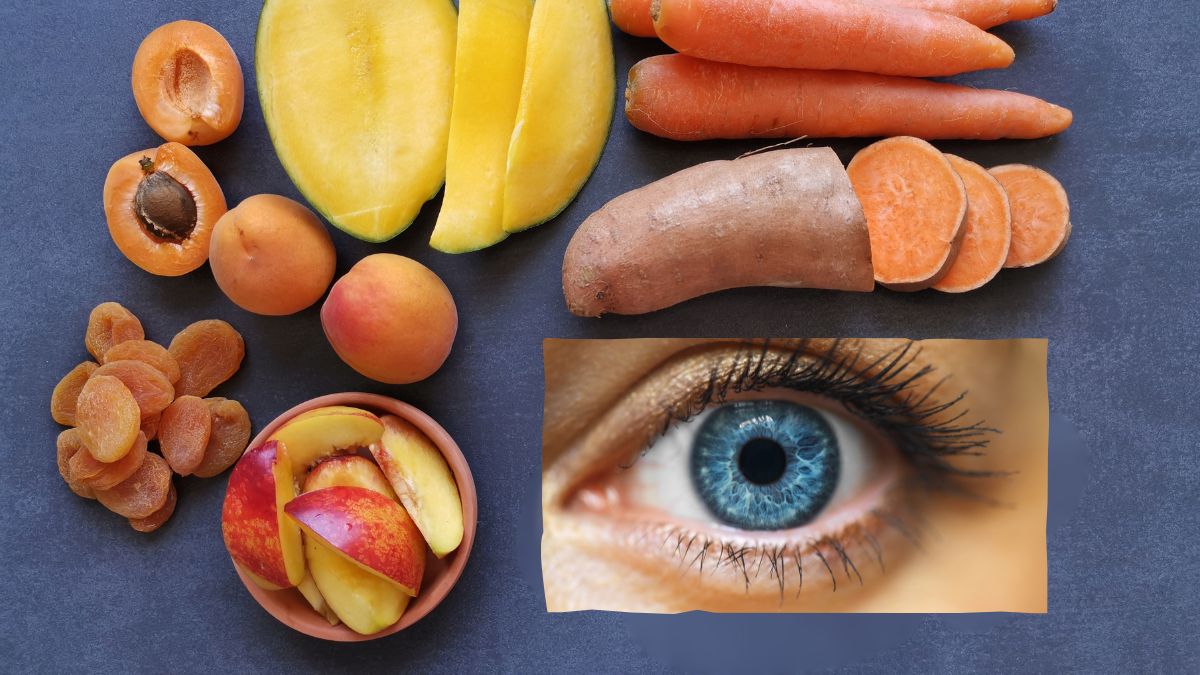
For years the consumption of carrots has been associated with visual and skin health, and it is no coincidence, since they contain β-carotene, which It is a vibrant pigment that belongs to the family of carotenoids, which is one of the key nutrients for aging vision.
This nutrient acts as the predominant dietary source of provitamin Awhich means that our body has the ability to transform it into vitamin A according to its needs, according to a recent study published by PubMed.
Eye health benefits
According to the renowned Age-Related Eye Disease Study (AREDS) trial, sponsored by the federal government’s National Eye Institute, supplementation with β-carotene—in combination with vitamins C, E, zinc, and copper—was shown to be an effective tool in reducing the risk of developing age-related macular degeneration (AMD) in advanced stages.
The study found that, when using a dose of 17mga significantly high amount that is well above the average consumption of the general population, is effective for visual health.
Although there is no Recommended Daily Allowance (RDA) fixed, experts suggest a minimum consumption of beta-carotene between 3 and 6 mg per day through food. However, toCurrently, the average consumption in adults over 50 years of age is barely 2.6 to 2.7 mg per day.
Main sources of β-carotene
To improve the levels of β-carotene In the diet, these are the foods that cannot be missed, ordered from the most concentrated to the least:
Pumpkin (cooked and winter)
The queen of beta-carotenes is cooked pumpkin with a contribution of 8.5mg for 1/2 cup and the winter squash with 3.9mg for 1/2 cup. Pumpkins release beta-carotene more bioavailableespecially when cooked, reaching a point higher than that of carrots. It has a powerful antioxidant effect that helps prevent retinal damage and night blindness.
Carrots (cooked and raw)
Half a cup of cooked carrots contributes 6.3mg of beta-carotenes, while raw ones provide 5.3mg per unit. Cooking increases the absorption of beta-carotene, protecting against AMD and cataracts. Furthermore, it has an effect photoprotector in retinopathy and other ocular pathologies.
Spinach (cooked and raw) and kale
Spinach is another safe source of beta-carotene with a contribution of 5.0mg for every half cup cooked; When consumed raw, they provide 2.1mg per cup. He kale contributes 3.7mg for every half cup next to the lutein. This combination is powerful for the retina, reducing the progression of AMD.
Other sources of this powerful antioxidant are:
Romaine lettuce (1/2 cup): Contribute 0.5 mg.:
Sweet red pepper (1 medium): Contains 2.9mg.
Raw spinach (1 cup): They contribute 2.1mg.
Cantaloupe Melon (1/2 cup): A refreshing option with 1.2mg.
Raw apricots (1 medium): They contribute 0.9 mg.
Cooked broccoli (1/2 cup): Contains 0.8 mg.
Keep reading:
.Healthy liver: 3 foods you should never mix with red onion (and why)
Why eating grapes daily could transform your intestinal and brain health?
Is olive oil the best remedy for fatty liver? This reveals science