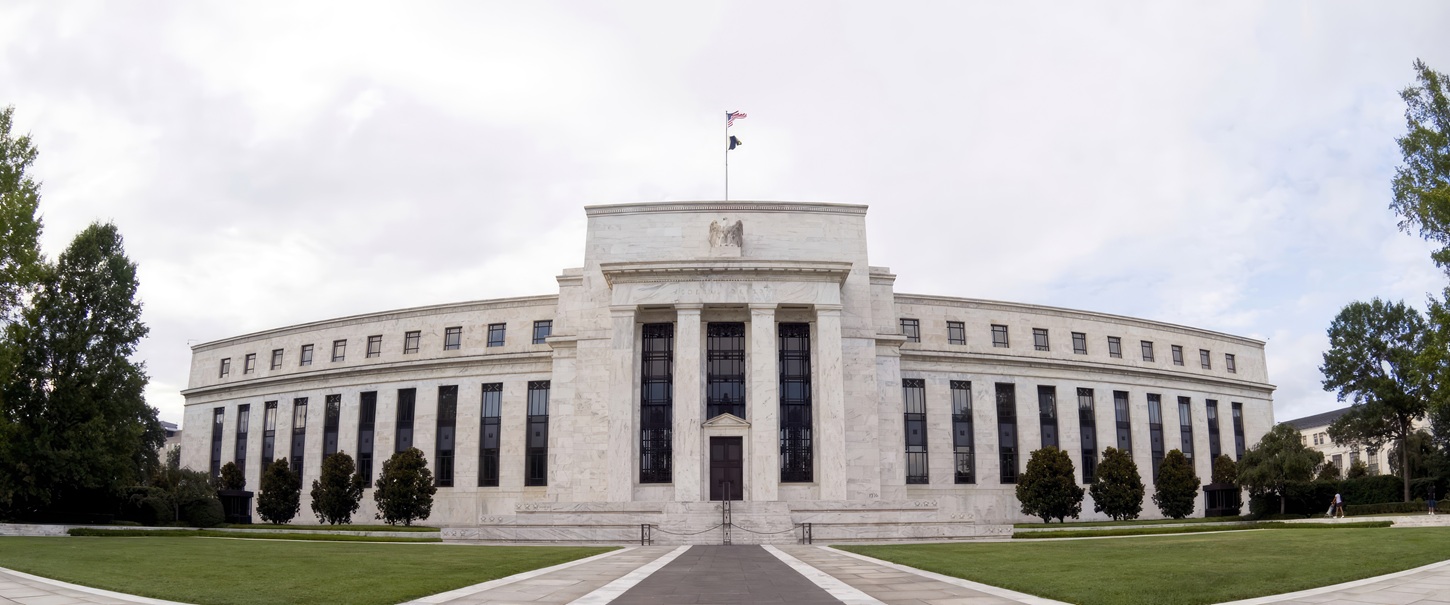
The Federal Reserve decided to keep interest rates unchanged this Wednesday, leaving the range at 3.50%?3.75%, confirming that the cost of money will remain high for millions of families.
With this decision, those who have debt on credit cards, adjustable rate mortgages or personal loans They will continue to pay high interest in the coming monthswithout immediate relief.
The decision, announced at 2:00 PM ETconfirms what the market anticipated, as a consequence of persistent inflation and pressures on energy prices. Before the announcement, the market practically took a pause in rates for granted, in a context of inflation that rose from 2.4% in February to 3.3% in March and an international environment that continues to put pressure on energy prices.
What did the Fed say about inflation and the economy?
In its statement, the Fed acknowledged that the decision is due to the fact that “inflation remains high” and that uncertainty about the economy has increased, “in part due to the rise in energy prices.”
For his part, the still chairman of the Fed, Jerome Powell, acknowledged that it is too early to estimate how inflation will behave in the coming weeks: “In the short term, higher energy prices will lift headline inflation, but it is too early to know the extent and duration of the potential impact.”
The University of Michigan confirmed that one-year inflation expectations reached 4.8%the largest monthly jump since April 2025. For this reason, Powell warned at the meeting that it is a risk factor to monitor.
Also the model Atlanta Fed GDPNow recorded a growth of 1.24% in the first quarter of 2026and the IMF cut its annual projection for the US to 1.8%. Powell recognized with these data that: the economy is growing, but slowing down.
Although in its general outlook, the central bank indicated that the US economy “has expanded at a solid pace. Job creation has remained low, on average, and the unemployment rate has barely changed in recent months.” He also reiterated that the objective of his decisions is to maintain “maximum employment and 2% inflation in the long term.”
The market had practically ruled out the possibility of any change in rates before the Fed confirmed the announcement.
Until this morning, prediction markets assigned a probability of ninety 9.8% that rates would not change at today’s meeting, according to financial platforms such as Polymarket and FRC Compare. The CME FedWatch tool, which measures federal funds expectations, indicated that the probability of there being a technological break 100%.
The direct cause is inflation. The Consumer Price Index for March 3.3% annuallywas mainly driven by the rise in energy prices, linked to the conflict in Iran.
The conflict in Iran: the factor that freezes your rate
Since the start of the conflict at the end of February, the price of Brent oil has risen more than 55%making gasoline and fuel more expensive for flights throughout the country.
Economists from the Monetary Institution of The US pointed out in a recent note that the Fed “will remain firmly on pause at its April meeting” and? “the upward risks to inflation derived from the war with Iran have not disappeared”. As a consequence of this decision, the cost of money will remain high for people who have variable debts in the coming months, according to estimates.
Deutsche Monetary Institution even projected that there will be no no change in rates for the entire rest of 2026. Same position of the futures markets, which changed their opinion regarding the analysis they had in January.
What you pay more each month while the Fed does not lower rates
Today’s decision has a direct effect on three categories that especially hit Hispanic families:
Credit cards
The average rate on variable rate credit cards is directly linked to the Fed rate. With the rate ranging between 3.50% and 3.75%, the national average on cards exceeds the 20% APR. He 29.4% of Hispanics has credit card debt ranging from $6,000 to $10,000; he 19.1% owe between $11,000 and $15,000. As long as the Fed maintains these rates, balances continue to accrue interest at the current rate.
Adjustable Rate Mortgages
30-year fixed-rate mortgages remain around 6.5%according to data from Forbes Manual at the end of the first quarter. But adjustable rate ARMs do respond more directly to the Fed’s movements, and any prolonged pause keeps their costs high.
Mike Fratantoni, chief economist at Mortgage Bankers Affiliation, said: “A growing number of FOMC members expect no cuts or one at most this year”which complicates projections for home buyers.
Car and personal loans
Auto loan rates also remain high, and buyers are choosing to hire longer terms to reduce the monthly payment, which increases the total cost of long-term financing.
Differences between governors increase
The governor Stephen Miran He had remained the only governor who has pushed to lower rates by 25 points in the last two meetings (January and March). However, this Wednesday the voices that requested a new rate cut in the future grew.
According to CNBC, three governors dissentedthe largest internal division at the central bank since October 1992. All three agreed to maintain rates in April, but opposed including language in the statement that suggested “possible future cuts”since it implied that the previous cuts were the door for new downward adjustments. That nuance caused the internal fracture.
What Powell said at his last press conference
In what was probably his last press conference as head of the Fed, Jerome Powell He made it clear this Wednesday that the central bank is in no hurry to act: “Our policy is in a good place to wait and see how the situation evolves”the official said before the media.
Powell acknowledged the pressure that the conflict in Iran puts on prices, and described the rise in oil, which exceeds $106 dollars per barrel with the Strait of Hormuz still closed, as a supply phenomenon, not demand-driven inflation. That distinction means that the Fed classifies this factor as “transitory,” so it would not need to raise rates to combat it.
The Fed president also warned of the tension he faces in fulfilling his two mandates: “There is a downward risk for the labor market, which suggests keeping rates low; but there is an upward risk for inflation, which suggests that perhaps it is not advisable to keep them low. There is tension between the two objectives”Powell declared.
Regarding long-term inflation expectations, Powell stated that “they seem to be well anchored beyond the short term”which for now removes the scenario of a rate increase, the one most feared by people who have active loans.
Kevin Warsh advances in the Senate, as the new president of the Fed
In parallel, the Senate Banking Committee approved in a partisan vote the nomination of Kevin Warsh as Powell’s successor at the head of the Central Bank. The full Senate is expected to ratify it before the meeting of the June 16-17. Powell now faces a historic decision: retire when Warsh takes office, or stay as governor until then, something that has not happened since Marriner Eccles in 1948.
What were three possible scenarios and what would they mean for your pocketbook?
Frequently asked questions (FAQ): The Fed’s decision and its impact on the Hispanic community
What time does the Fed announce its decision today?
The official statement from the Federal Open Market Committee (FOMC) was published on Wednesday, April 29 at 2:00 PM ET. Jerome Powell’s press conference will begin at 2:30 PM ET.
Will rates go down today?
No. The Fed confirmed the market forecast to keep rates unchanged (in a range of 3.50%–3.75%), driven by inflation of 3.3% in March and the conflict in Iran.
When could there be a rate cut?
Several analysts project that there will be no cuts for the rest of 2026. Futures markets no longer anticipate any downward movement this year.
How does this pause affect my credit card?
For a variable rate card, your APR will not go down until the Fed acts. With average rates above 20%, an $8,000 debt generates more than $130 per month in interest alone.
Is it a good time to buy a house with this decision?
The pause keeps 30-year mortgages close to 6.5%. Experts recommend comparing between fixed and adjustable rates. An eventual lowering of rates could generate a wave of buyers that pressures prices upwards.
What is the FOMC?
The Federal Open Market Committee is the body of the Federal Reserve that sets the federal funds rate. It is made up of the 7 governors of the Fed and 5 presidents of regional banks.
Conclusion
Today’s Fed pause on interest rates confirms the market forecast. But the important thing is what Powell says in his last conference as chairman of the Fed. If Powell sounds hawkish, the markets will interpret it as another quarter without relief. For a family with $10,000 in card debt, that translates to about $170 more in interest before summer hits.
For those who have debt on cards, a financed car or a dream of buying a house, the conference will reveal very important data about the financial future of families.
We will update in valid time after the 2:00 pm ET announcement
Keep reading:
– Inflation in the US: the expenses that are most at risk of rising in the next 90 days
– 63% of Latinos say their financial situation is bad: the real problem is how much money they are missing each month
– A family needs $1,300 more a month to survive in the US as economic pessimism breaks records